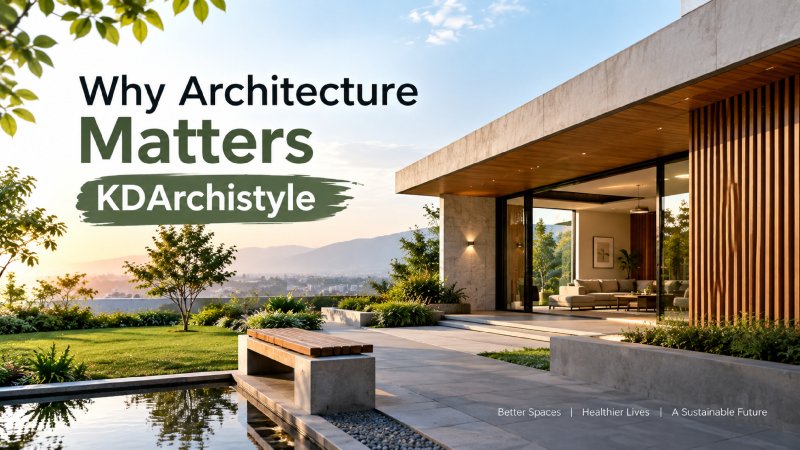
Architecture affects much more than the appearance of a building. It influences how people use rooms, move between spaces, spend their time, and experience their surroundings. A carefully planned structure can feel comfortable without being complicated. It can also respond to weather, local conditions, available resources, and the needs of its users. Looking at Why Architecture Matters KDArchistyle gives us an opportunity to understand these connections. Good architectural thinking combines practical planning with creativity. It considers people, the environment, materials, and the purpose of a place before turning an idea into a physical structure.
Design Begins With People
A building becomes useful when its design responds to the people who will occupy it. A family home may need privacy and flexible rooms. An office may require areas for concentration, meetings, and collaboration. A school needs spaces that support learning and movement.
These different requirements show why there is no single formula for successful design. Architects need to understand the activities that will take place inside a building. They also need to consider how people enter, move around, rest, work, and interact.
Even simple choices can influence daily experiences. A convenient entrance can make movement easier. A well-placed window can bring daylight into a dark corner. A sensible room arrangement can prevent unnecessary movement.
Practical Planning and Visual Appeal
Architecture has both practical and artistic sides. A building should perform its intended job while also creating a pleasant visual experience.
Designers may consider the following points:
- Purpose: Every area should have a clear reason for being there.
- Movement: Doors, halls, stairs, and entrances should create an understandable route.
- Comfort: Temperature, sound, lighting, and airflow can affect how a space feels.
- Materials: Surfaces should match the building’s purpose and expected use.
- Appearance: Shapes, textures, and proportions can give a structure its own character.
- Maintenance: Sensible choices can make future care easier.
A successful project does not need excessive decoration. Sometimes a simple arrangement can provide a stronger result than a complicated one.
Important Architectural Considerations
Different design decisions work together to influence the quality of a building.
| Design Consideration | What It Can Improve | Example |
| Daylight | Interior atmosphere | Windows positioned for useful sunlight |
| Room Planning | Daily convenience | Spaces arranged around common activities |
| Air Movement | Indoor comfort | Openings that support natural airflow |
| Material Choice | Strength and appearance | Materials selected for the local conditions |
| Adaptability | Future usefulness | Rooms that can serve different purposes |
These considerations can be adjusted according to the building type, location, budget, and user requirements.
The Value of Natural Elements
A connection with nature can make indoor spaces feel more pleasant. Sunlight, fresh air, greenery, and outdoor views can add character to a building.
Architects can introduce these elements through courtyards, balconies, large openings, shaded windows, gardens, or carefully positioned outdoor areas. The goal is not simply to add decoration. These features can create a stronger relationship between indoor and outdoor spaces.
Climate also matters. A design suitable for a hot region may differ considerably from one created for a colder environment. Local weather conditions should therefore influence important design decisions.
Smarter Use of Resources
Architecture also has a connection with resource management. Buildings require materials, energy, water, and ongoing maintenance. Design decisions can influence how much of these resources a structure needs throughout its useful life.
For example, appropriate shading can reduce unwanted heat from strong sunlight. Good insulation can help maintain indoor temperatures. Efficient layouts can reduce wasted space.
Material selection also deserves attention. Durable products may remain useful for longer and can reduce the frequency of replacement. Reusing existing structures can sometimes be another practical way to reduce unnecessary construction.
Buildings and Local Identity
Every location has its own character. Architecture can respond to that character through materials, proportions, colors, construction traditions, and spatial patterns.
A building that respects its surroundings may feel more connected to its location. It does not necessarily need to copy older structures. Instead, designers can reinterpret local ideas in a contemporary way.
This approach can help create places that feel distinctive rather than generic.Good architectural choices can give a local area its own recognizable character and atmosphere.
Spaces That Bring People Together
The design of shared areas can influence social interaction. Entrances, courtyards, sidewalks, gardens, plazas, and common rooms can create opportunities for people to meet.
When these areas are easy to access and comfortable to use, they can become active parts of daily life. People may stop to talk, spend time outdoors, or participate in community activities.
This shows that architecture can affect relationships as well as physical surroundings. A thoughtful layout can make interaction feel natural instead of forced.
Planning for the Future
Buildings often remain in use long after their original designers have moved on. User requirements can change during that period.
A bedroom may later become an office. A commercial space may need a different layout. A workplace may require additional areas for new activities.
Flexible architecture can respond to these changes more easily. Movable partitions, adaptable rooms, and sensible structural planning can give a building greater long-term value.
Good design therefore considers not only today’s requirements but also possible future needs.
Final Thoughts: Why Architecture Matters KDArchistyle
The idea behind Why Architecture Matters KDArchistyle goes beyond visual beauty. Architecture influences daily routines, comfort, resource use, cultural identity, and the way people connect with shared spaces. A well-planned building can support its users while also fitting naturally into its environment.
The best architectural decisions are thoughtful rather than unnecessary. They consider purpose, people, climate, materials, and future use together. When these factors receive proper attention, a building can remain useful and meaningful for many years. For more details Click here